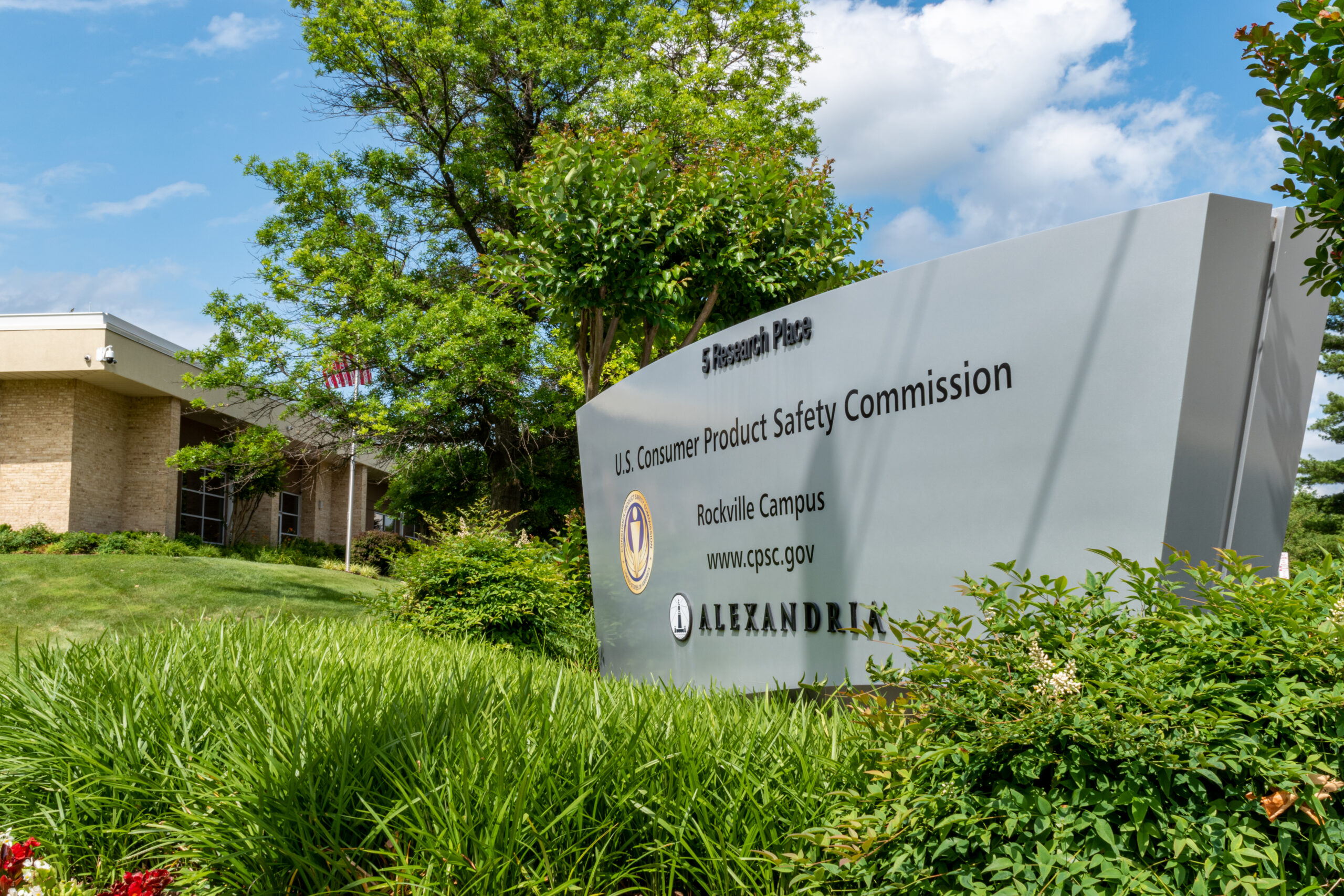
On October 2, 2025, President Donald Trump nominated William “Billy” Hewes III, a Republican politician from Mississippi, to serve as a Commissioner of the U.S. Consumer Product Safety Commission (CPSC).
Destinee decided she would be a lawyer when she was five years old. Her childhood dream never faded, and she spent her education and training focusing on honing her writing skills. As a result, once she decided to officially pursue a legal career, she knew she had one of the key skills needed for success.
On July 23, 2025, the U.S. Supreme Court, in a 6-3 vote, granted the Trump Administration’s request to stay a permanent injunction that had ordered the reinstatement of three Democratic CPSC Commissioners: Mary Boyle, Alexander Hoehn-Saric, and Richard Trumka Jr. (the “Commissioners”), after the Administration fired them from the independent agency without cause.
Background
On June 23, 2025, Judge Matthew J. Maddox of the U.S. District Court for the District of Maryland denied a motion by President Donald J. Trump and other officials (“Defendants”) to stay his order reinstating three Democratic CPSC Commissioners: Mary Boyle, Alexander Hoehn-Saric, and Richard Trumka Jr. (the “Commissioners”). The motion, filed on June 16, 2025, sought to pause the court’s injunction, prohibiting any action to effectuate the Commissioners’ removal, while the case is appealed to the U.S. Court of Appeals for the Fourth Circuit. Prior to the district court’s decision, Defendants filed an emergency motion for a stay with the Fourth Circuit on June 17, 2025, which was denied on July 1, 2025. The next day, the Trump Administration submitted an application to the U.S. Supreme Court for an administrative stay and a stay pending appeal.
On Friday, Judge Matthew J. Maddox of the U.S. District Court for the District of Maryland ruled that the removal of Democratic Commissioners from the Consumer Product Safety Commission (“CPSC”) without cause was unlawful. This decision arises from a lawsuit filed by Commissioners Mary Boyle, Alexander Hoehn-Saric, and Richard Trumka Jr. against President Donald J.
Last week, we reported on the Trump Administration’s abrupt firing of all three Democratic Commissioners of the Consumer Product Safety Commission (“CPSC” or the “Commission”). At the time, the fired Commissioners expressed their intention to challenge their removal in court, with former Commissioner Richard Trumka Jr. publicly stating, “See you in court, Mr. President.” Following through on that statement, legal proceedings have now begun.
We previously reported that the Illinois Supreme Court issued its long-awaited decision in Martin v. Goodrich Corp., upholding the constitutionality of a 2019 amendment to the Illinois Workers’ Occupational Diseases Act (the “Act”).1 Since then, the Seventh Circuit has recognized the Illinois Supreme Court’s ruling as an “unequivocal determination” of Illinois law and allowed a plaintiff’s tort claims to proceed as exempt from the Act’s exclusivity provisions.
On January 24, 2025, the Illinois Supreme Court issued its long-awaited decision in Martin v. Goodrich Corp., upholding the constitutionality of a 2019 amendment to the Illinois Workers’ Occupational Diseases Act (the “Act”).1 This decision confirms that Plaintiffs can indeed file civil claims after the 25-year statute of repose period for asbestos claims under Workers’ Compensation has expired. This decision will have a far-reaching impact throughout toxic tort litigation as it allows employees to pursue civil claims against their employers even if their Workers’ Compensation claim would otherwise be barred.
A Multidistrict Litigation started by a TikTok trend of individuals breaking into cars recently settled for an estimated $200 million. The Plaintiffs alleged that the Defendants—Hyundai and Kia—knowingly sold defective vehicles that were vulnerable to theft while also asserting that Defendants prioritized profits over safety. The vehicles at issue included 2011-2022 Kia vehicles and 2015-2022 Hyundai vehicles that were equipped with traditional “insert-and-turn” steel key ignition systems. Plaintiffs argued that vehicles lacking immobilizer technology were particularly susceptible to theft. According to Plaintiffs, without an immobilizer, anyone with a USB cable could steal the vehicle. Plaintiffs’ lawsuit encompassed various claims, including consumer fraud, unjust enrichment, and deceptive trade practices.