Photo of Robert Rakers

Robert Rakers

Robert defends clients in asbestos exposure claims in difficult jurisdictions throughout the Midwest. In this role, he directs and assists with the formulation and implementation of defense strategies from the initial pleading stages through resolution or dismissal.

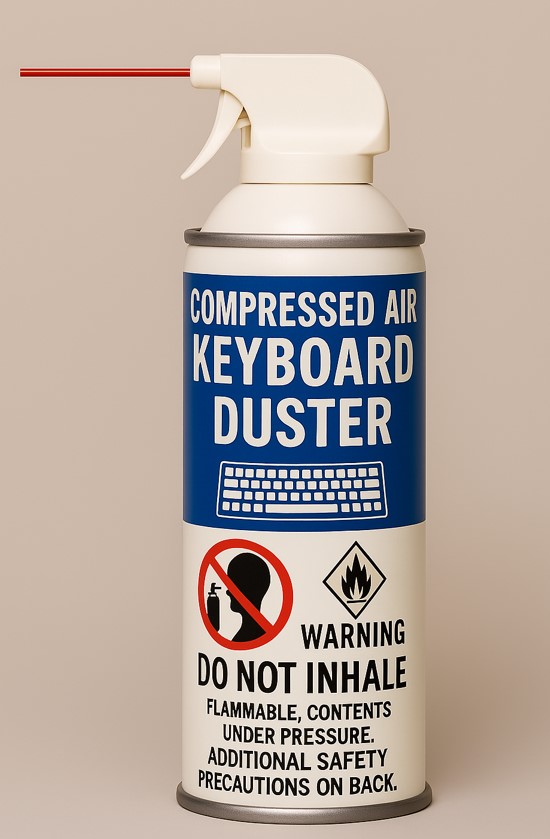
Each year, thousands of individuals are severely injured or die from intentional inhalation of everyday products like computer duster to achieve a euphoric high. When these injuries or deaths lead to lawsuits against manufacturers, plaintiffs often argue that the products were defectively designed or inadequately warned. A recent Tenth Circuit decision reinforces a critical limit on such claims under Kansas law: when the plaintiff’s own criminal conduct is the proximate cause of the harm, recovery is barred.

In Walter Coleman, et al. v. Burger King Corp., No. 22-20925 (S.D. Fla.), a putative class of consumers from thirteen states alleges that Burger King’s advertising for items such as the Whopper materially exaggerates portion sizes, making the burgers appear up to 35% larger than they actually are. Plaintiffs claim that since 2017, Burger King’s marketing has depicted patties protruding beyond the buns—imagery they say misleads consumers into believing the product has increased in size when it has not. The second amended complaint asserts fourteen counts: violations of consumer-protection laws in eleven states (including Florida, California, and
New York) plus Florida common-law claims for breach of contract, negligent misrepresentation, and unjust enrichment. The plaintiffs seek damages, restitution, injunctive relief, and attorneys’ fees for a nationwide class and state subclasses.

As a sovereign entity, the United States government is immune from suit unless it consents to be sued.1 However, its sovereign immunity may be waived under certain circumstances under the Federal Torts Claim Act (“FTCA”), which is the exclusive remedy for state law torts committed by federal employees within the scope of their employment.2

In December 2024, we reported on a City of St. Louis, Missouri jury verdict in favor of baby formula manufacturers in a lawsuit claiming their specialized infant formulas for premature babies caused an infant to develop necrotizing enterocolitis (NEC), a potentially fatal condition. This was a landmark win for the manufacturers who have been embroiled in ongoing litigation for several years, especially considering the plaintiff in this case asked the jury for a staggering $6 billion in punitive damages. Although the defense verdict in this case seemingly cleared the manufacturers, a St. Louis Court recently negated the verdict and ordered a new trial.

A jury in St. Louis, Missouri was recently asked to award over $6 billion in damages against baby formula manufacturers defendants in a lawsuit that alleged the defendants’ specialized infant formulas for premature babies caused the development of necrotizing enterocolitis (NEC), a potentially fatal condition. NEC is a severe gastrointestinal condition that primarily affects premature babies, leading to inflammation and bacterial invasion of the intestine, which can cause significant health issues and lead to death. After three hours of deliberations, the jury found the defendants not liable for Plaintiffs’ product defect, failure to warn and negligence claims.

On December 16, 2022, the Ohio Supreme Court issued a ruling in Brandt v. Pompa that may call into question the applicability of Ohio’s non-economic damages cap in future tort actions. Under tort reform enacted in Ohio in 2005, R.C. 2315.18 (B)(2) expressly limits non-economic damages to $250,000, or an amount equal to three times the economic loss for a maximum of $350,000 per plaintiff, with a $500,000 limit per occurrence. The Court had previously ruled the cap constitutional on its face. In Brandt, the Supreme Court found the non-economic damages caps unconstitutional as applied to a victim of childhood sexual assault who suffered lengthy and severe psychological trauma.

New Jersey based pharmaceutical, medical and consumer goods giant Johnson & Johnson has found itself at the center of national litigation conversation over the last few years due to explosive verdicts rendered against it over allegations that its talcum powder causes ovarian cancer and asbestos-related respiratory illnesses. In 2016 and 2017, Johnson & Johnson saw four verdicts in St. Louis ovarian cancer cases alone, with verdicts rendered in favor of the female plaintiffs of approximately $55 million, $70 million, $72 million and $110 million. Perhaps most shocking, however, was a $4.69 billion verdict obtained by twenty-two (22) different women suffering from ovarian cancer. In addition to $550 million in compensatory damages, the jury ordered Johnson & Johnson to pay $4.14 billion in punitive damages. Despite the trial itself exceeding six weeks, the St. Louis jurors reportedly reached their conclusion and verdict in less than one day. A Los Angeles jury ordered Johnson & Johnson to pay a California woman $417 million in damages in 2017, including $347 million in punitive damages.