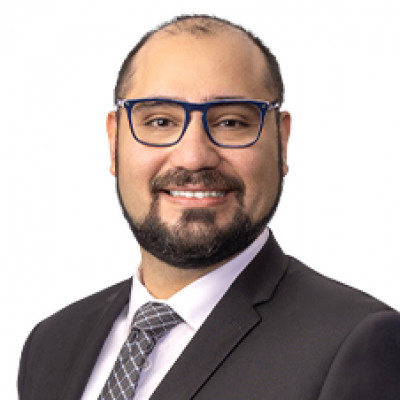

Photo of Shayan Heidarzadeh

Shayan Heidarzadeh

Shayan is a litigator who divides his practice between mass tort claims, environmental matters, and complex commercial disputes. He represents clients in both jury and bench trials in state and federal court, and he’s well-versed in defense work in plaintiff-friendly jurisdictions—where he has the skills to still achieve winning verdicts. Shayan is particularly adept at handling cases that rest on highly complex science, and he frequently works with expert witnesses. He knows that victory often depends on a solid understanding of the chemistry behind his argument.

Shayan began his career with a focus on mass tort work, representing equipment manufacturers, suppliers, and premises owners in complex multi-defendant personal injury and wrongful death lawsuits. He has defended clients in matters involving asbestos, talc, construction defect, and premises liability, and he has handled all phases of litigation, from initial complaint to final disposition at trial. While he remains active in the mass tort arena, the experience he gained in these cases led Shayan to expand his practice into litigation involving environmental contamination claims. Shayan represents property owners, manufacturers, and businesses in claims involving soil and groundwater contamination.

In addition to his work with mass tort and environmental regulations, Shayan also represents clients in general commercial litigation and business disputes. He handles breach of contract allegations and other contract disputes as well as litigation involving real property, including title disputes and allegations of real estate fraud.

A highly analytical attorney, Shayan excels at digging into cases and facts and finding alternative sources of exposure. He’s especially passionate about trial preparation and setting a client up to win, with a gift for anticipating his opponent’s next move in court. Shayan takes care to keep overall client goals and needs in mind at every stage, setting a compatible strategy from the very beginning of litigation.

In addition to his client work, Shayan devotes time to pro bono matters and supports diversity, equity, and inclusion efforts inside and outside the firm. He is an active member of Husch Blackwell’s APISWANA (Asian, Pacific Islander, Southwest Asian, North African) Employee Resource Group and values participation in the group’s mentoring program as both a mentor and mentee.

The proper allocation of the burden of proof during closing arguments is a recurring issue in civil litigation. On August 19, 2025, the Illinois First District Court of Appeals affirmed the trial court’s decision to grant a new trial in Harrell v. City of Chicago, offering important guidance regarding improper burden shifting during closing arguments. 2025 IL App (1st) 240119, ¶ 83. The ruling makes clear that while parties may highlight unrebutted evidence, only defendants may highlight when an expert was not retained to rebut or prove a specific element of the case.

A jury in St. Louis, Missouri was recently asked to award over $6 billion in damages against baby formula manufacturers defendants in a lawsuit that alleged the defendants’ specialized infant formulas for premature babies caused the development of necrotizing enterocolitis (NEC), a potentially fatal condition. NEC is a severe gastrointestinal condition that primarily affects premature babies, leading to inflammation and bacterial invasion of the intestine, which can cause significant health issues and lead to death. After three hours of deliberations, the jury found the defendants not liable for Plaintiffs’ product defect, failure to warn and negligence claims.

The recent wave of lawsuits against TikTok by over a dozen states and the District of Columbia[1] marks a significant moment in the ongoing scrutiny of social media platforms and their impact on youth mental health. The lawsuits allege that TikTok’s design and algorithm are intentionally addictive, contributing to various psychological harms among young users.

Observers of filing trends in personal injury mesothelioma matters alleging exposure to talc contaminated with asbestos have noted that the bankruptcy filing of a predominant defendant in those matters did little to slow the pace of such filings. Instead, as the filing of new matters continued, the number of defendants named in such filings substantially increased.

To exercise valid jurisdiction over any claim, a federal court must have both personal jurisdiction and subject matter jurisdiction. Subject matter jurisdiction can be based on diversity of citizenship, the presence of a federal question, or an issue that involves subject matter that only the federal court can decide. Separate and distinct from subject matter jurisdiction is the court’s inquiry into personal jurisdiction.