Photo of Audrey Allen

Audrey Allen

Audrey focuses her legal practice on resolving mass toxic tort and product liability litigation for clients. As a member of the firm’s Toxic Tort team, Audrey concentrates her practice on the defense of oil refineries and premises defendants involved in asbestos exposure claims nationwide.

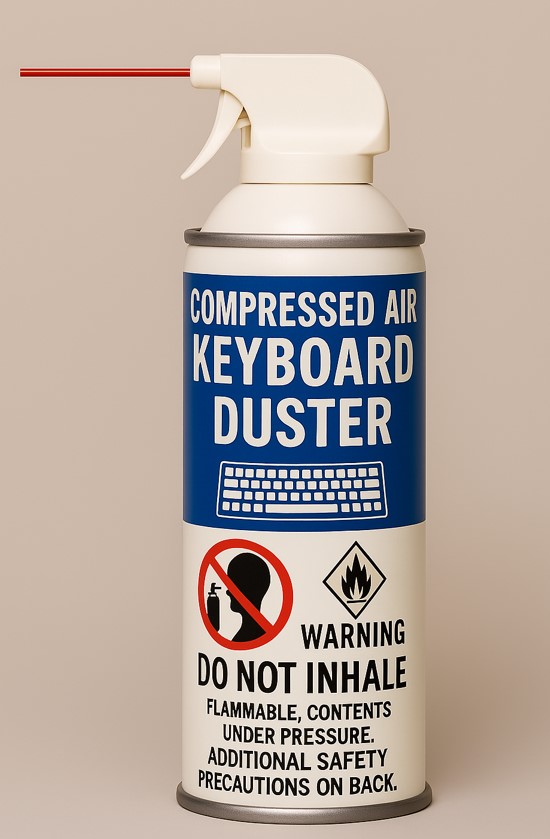
Each year, thousands of individuals are severely injured or die from intentional inhalation of everyday products like computer duster to achieve a euphoric high. When these injuries or deaths lead to lawsuits against manufacturers, plaintiffs often argue that the products were defectively designed or inadequately warned. A recent Tenth Circuit decision reinforces a critical limit on such claims under Kansas law: when the plaintiff’s own criminal conduct is the proximate cause of the harm, recovery is barred.

Synthetic dyes, once regarded as harmless ingredients that simply made foods more visually appealing and marketable, are now the subject of a dynamic bipartisan movement for reform. Thousands of food items in grocery stores in the United States utilize synthetic dyes, which have been linked to potential health risks, including behavioral effects in children and carcinogenicity in animal tests. One of these items, Red Dye No. 3—which is commonly used in candy and cereal—has been identified as carcinogenic by the FDA based on rat studies. Abroad, the EU mandates warning labels, while Australia and Japan restrict or ban them.

In Walter Coleman, et al. v. Burger King Corp., No. 22-20925 (S.D. Fla.), a putative class of consumers from thirteen states alleges that Burger King’s advertising for items such as the Whopper materially exaggerates portion sizes, making the burgers appear up to 35% larger than they actually are. Plaintiffs claim that since 2017, Burger King’s marketing has depicted patties protruding beyond the buns—imagery they say misleads consumers into believing the product has increased in size when it has not. The second amended complaint asserts fourteen counts: violations of consumer-protection laws in eleven states (including Florida, California, and
New York) plus Florida common-law claims for breach of contract, negligent misrepresentation, and unjust enrichment. The plaintiffs seek damages, restitution, injunctive relief, and attorneys’ fees for a nationwide class and state subclasses.

Georgia Senate Bill 68, signed into law by Governor Brian Kemp on April 21, 2025, introduces significant changes to the state’s civil litigation landscape. Most notable is the implementation of a mandatory 90-day stay of discovery after a litigant files a motion to dismiss. This provision takes effect on July 1, 2025, and allows defendants to challenge the validity of a case without the immediate burden of discovery, potentially saving time and resources if the motion is successful.

As a sovereign entity, the United States government is immune from suit unless it consents to be sued.1 However, its sovereign immunity may be waived under certain circumstances under the Federal Torts Claim Act (“FTCA”), which is the exclusive remedy for state law torts committed by federal employees within the scope of their employment.2

In February 2025, the United States Environmental Protection Agency announced it will delay the addition of nine per- and polyfluoroalkyl substances (“PFAS”) to its Toxics Release Inventory Report for the 2025 reporting year. “PFAS” is a term used to describe a diverse group of chemicals contained in many consumer products and industrial processes. The EPA’s announcement followed President Trump’s January 2025 memorandum “Regulatory Freeze Pending Review” which, among other things, requested a 60-day postponement “to the effective date memorandum for any rules that have been published in the Federal Register, or any rules that have been issued in any manner but have not taken effect, so that the administration may review any questions of fact, law, and policy that the rules may raise.” Accordingly, impacted industries now have additional time to prepare for new PFAS reporting requirements under the Emergency Planning and Community Right-to-Know Act (“EPCRA”) and the Pollution Prevention Act (“PPA”) following the addition of nine PFAS chemicals to the Toxics Release Inventory (“TRI”).

A jury in St. Louis, Missouri was recently asked to award over $6 billion in damages against baby formula manufacturers defendants in a lawsuit that alleged the defendants’ specialized infant formulas for premature babies caused the development of necrotizing enterocolitis (NEC), a potentially fatal condition. NEC is a severe gastrointestinal condition that primarily affects premature babies, leading to inflammation and bacterial invasion of the intestine, which can cause significant health issues and lead to death. After three hours of deliberations, the jury found the defendants not liable for Plaintiffs’ product defect, failure to warn and negligence claims.

In April, the U.S. Food and Drug Administration (FDA) released the results of its 2023 sampling assignment, testing for asbestos in talc-containing products. The results confirmed the absence of asbestos in all 50 samples tested, marking the third consecutive year of asbestos-free talc products in the United States. While this news is reassuring for industry participants, the legal landscape remains complex due to ongoing litigation. This article explores the legal implications, potential risks, and regulatory changes related to asbestos detection in cosmetic talc products.

New York’s Court of Appeals recently reversed a $16,500,000 asbestos jury verdict in a case brought by decedent Florence Nemeth and her husband, who alleged that Mrs. Nemeth’s cancer was caused by her use of Desert Flower Talcum Powder. In Nemeth v. Brenntag North America, et al., 2022 WL 1217464 (Ct. App. NY Apr. 26, 2022), the state’s highest court overturned the decision on the grounds that the plaintiff’s experts failed to present sufficient evidence to prove that the talc-based cosmetic powder caused decedent’s peritoneal mesothelioma.