
On December 2, 2025, Bayer announced that the Solicitor General of the United States,
D. John Sauer1 has recommended the United States Supreme Court take up the Monsanto Co. v. Durnell2 appeal on the Roundup product litigation. The Supreme Court previously invited the Solicitor General to weigh in on the views of the United States.3 In response, Mr. Sauer’s office authored their own petition for a writ of certiorari, agreeing with Monsanto Company (“Monsanto”)’s arguments that the Federal Insecticide, Fungicide, and Rodenticide Act (“FIFRA”)4 preempts state-law failure-to-warn claims concerning Roundup.
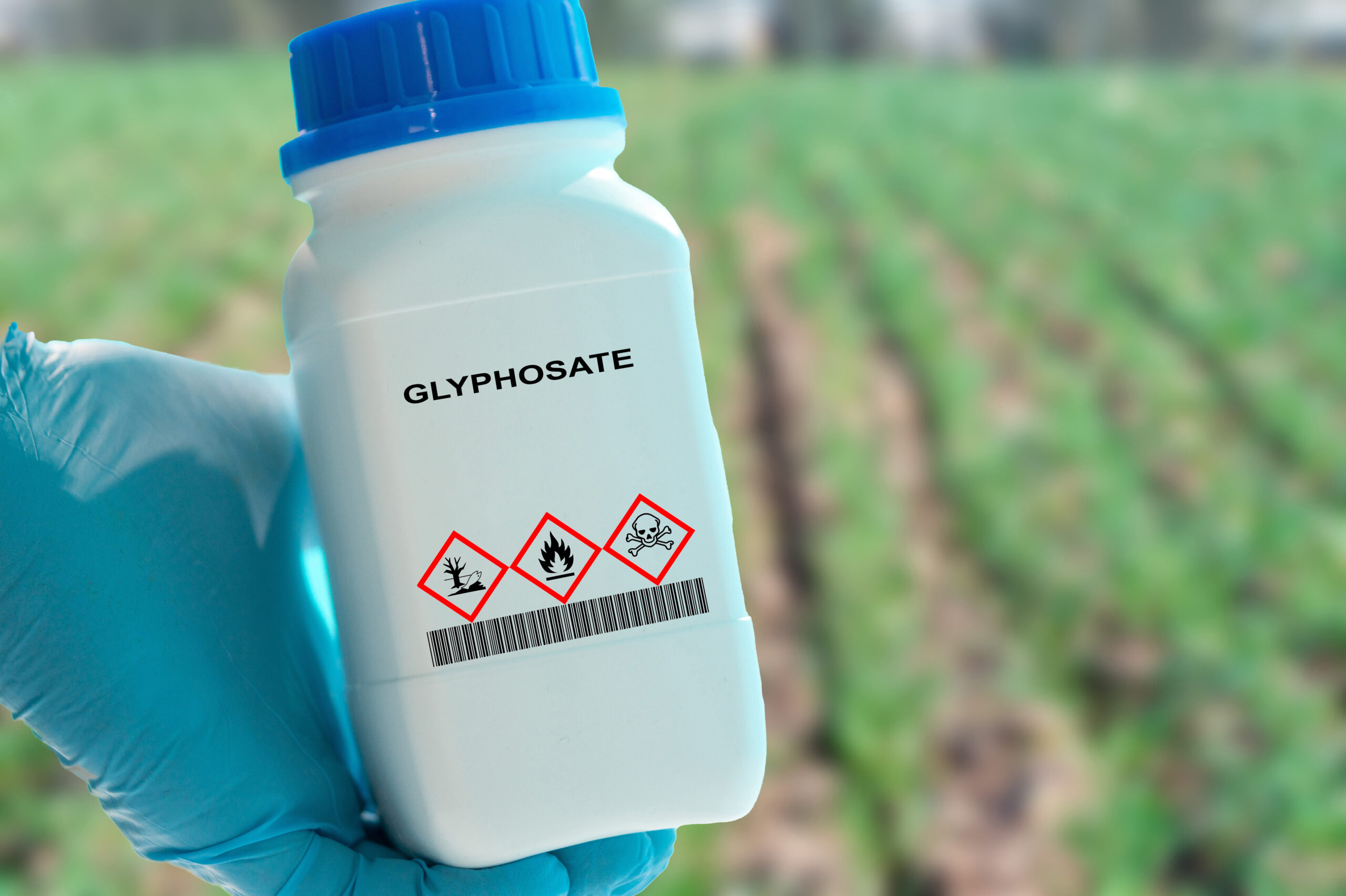
Roundup is a popular herbicide that has been registered by the U.S. Environmental Protection Agency (“EPA”) since 1974. Since then, the EPA has classified glyphosate, an ingredient in Roundup, as a chemical that is not likely to be carcinogenic in humans.5 Therefore, the EPA approved hundreds of labels for Roundup and other glyphosate-based products without requiring a cancer warning. The EPA has determined that a cancer warning is not required, and thus, cannot be added to the Roundup product label without their approval. Regardless of the inability to change the Roundup label according to EPA regulations, Monsanto has been facing many state-law failure-to-warn claims filed by personal injury attorneys.
Currently, FIFRA prohibits the distribution or sale of a pesticide “that is not registered” by the EPA. To decide whether a pesticide should be registered, the EPA must determine whether “its labeling compl[ies] with the requirements of” FIFRA.6 The EPA also must analyze whether, “when used in accordance with widespread and commonly recognized practice,” the pesticide “will not generally cause unreasonable adverse effects on the environment.”7 The term “unreasonable adverse effects on the environment” is defined to include “any unreasonable risk to man or the environment, taking into account the economic, social, and environmental costs and benefits of the use of any pesticide.”8 If a pesticide’s label does not contain a warning “necessary and . . . adequate to protect health and the environment,”9 then the pesticide is considered “misbranded.”10 Misbranded products cannot be legally sold in the United States.
Pursuant to federal regulations, the states cannot impose their own labeling requirements that diverge from those set out in FIFRA.11 However, Roundup opponents argue that Monsanto should still be liable for the failure-to-warn consumers the product allegedly can cause cancer under separate state products liability laws. The Solicitor General argues this is incorrect, along with the Third Circuit.12
The Roundup litigation is currently involved in a “circuit split”, where the Ninth and Eleventh Circuit Courts of Appeals have come to differing conclusions on the labeling question than the Third Circuit Court of Appeals.13 Most recently, the Third Circuit held that EPA’s approval of Roundup labels without a cancer warning, combined with regulations requiring the agency’s approval before such a warning may be added, precludes the imposition of state-law tort liability based on a petitioner’s failure to warn of cancer risks.14
The Supreme Court has not announced if they are accepting the case on certiorari yet. Each year, the Supreme Court receives upwards of 7,000 petitions for certiorari.15 Around 1% of the petitions make the docket.16 However, the Supreme Court is significantly more likely to accept a case on certiorari with the support from the Solicitor General.17
- Mr. Sauer was formerly the Solicitor General of Missouri from 2017 to 2023. ↩︎
- Originally filed as Durnell v. Monsanto Co., No. 1922-CC00221 (Mo. Cir. Ct., 22nd Jud. Cir. Oct. 26, 2023). ↩︎
- Monsanto Co. v. Durnell. Brief amicus curiae of the United States. Dec. 2025. ↩︎
- 7 U.S.C. 136 et seq. ↩︎
- Glyphosate, U.S. Environmental Protection Agency, (May 9, 2025) ↩︎
- 7 U.S.C. 136a(c)(5)(B). ↩︎
- 7 U.S.C. 136a(c)(5)(D). ↩︎
- 7 U.S.C. 136(bb). ↩︎
- 7 U.S.C. 136(q)(1)(G). ↩︎
- 7 U.S.C. 136(q)(1). ↩︎
- 7 U.S.C. 136v(b). ↩︎
- Monsanto Co. v. Durnell. Brief amicus curiae of the United States. Dec. 2025. ↩︎
- See Hardeman v. Monsanto Co., 997 F.3d 941, 955—958 (9th Cir. 2021), cert. denied, 142 S. Ct. 2834 (2022); Carson v. Monsanto Co., 92 F.4th 980, 989—996 (11th Cir. 2024); contra Schaffner v. Monsanto Corp., 113 F.4th 364, 399 (3d Cir. 2024). ↩︎
- Schaffner v. Monsanto Corp., 113 F.4th 364, 399 (3d Cir. 2024). ↩︎
- Frequently Asked Questions: General Information, Supreme Court of the U.S. [https://perma.cc/4SL7-HZMX]. ↩︎
- Adam Feldman & Alexander Kappner, Finding Certainty in Cert: An Empirical Analysis of the Factors Involved in Supreme Court Certiorari Decisions from 2001–2015, 61 Vill. L. Rev. 795, 795 (2017). ↩︎
- Patricia A. Millett, “We’re Your Government and We’re Here to Help”: Obtaining Amicus Support from the Federal Government in Supreme Court Cases, J. App. Prac. & Process, Vol. 10, No. 1 (Spring 2009). ↩︎